
Torch-On and Flat Roof Cleaning for Modern Lower Mainland Homes
Modern and contemporary Lower Mainland homes increasingly use flat and low-slope roofs, often finished with torch-on membrane. They look clean and architectural, and they collect and hold debris and growth in ways a steep pitched roof does not. Cleaning them is a different job with its own rules.
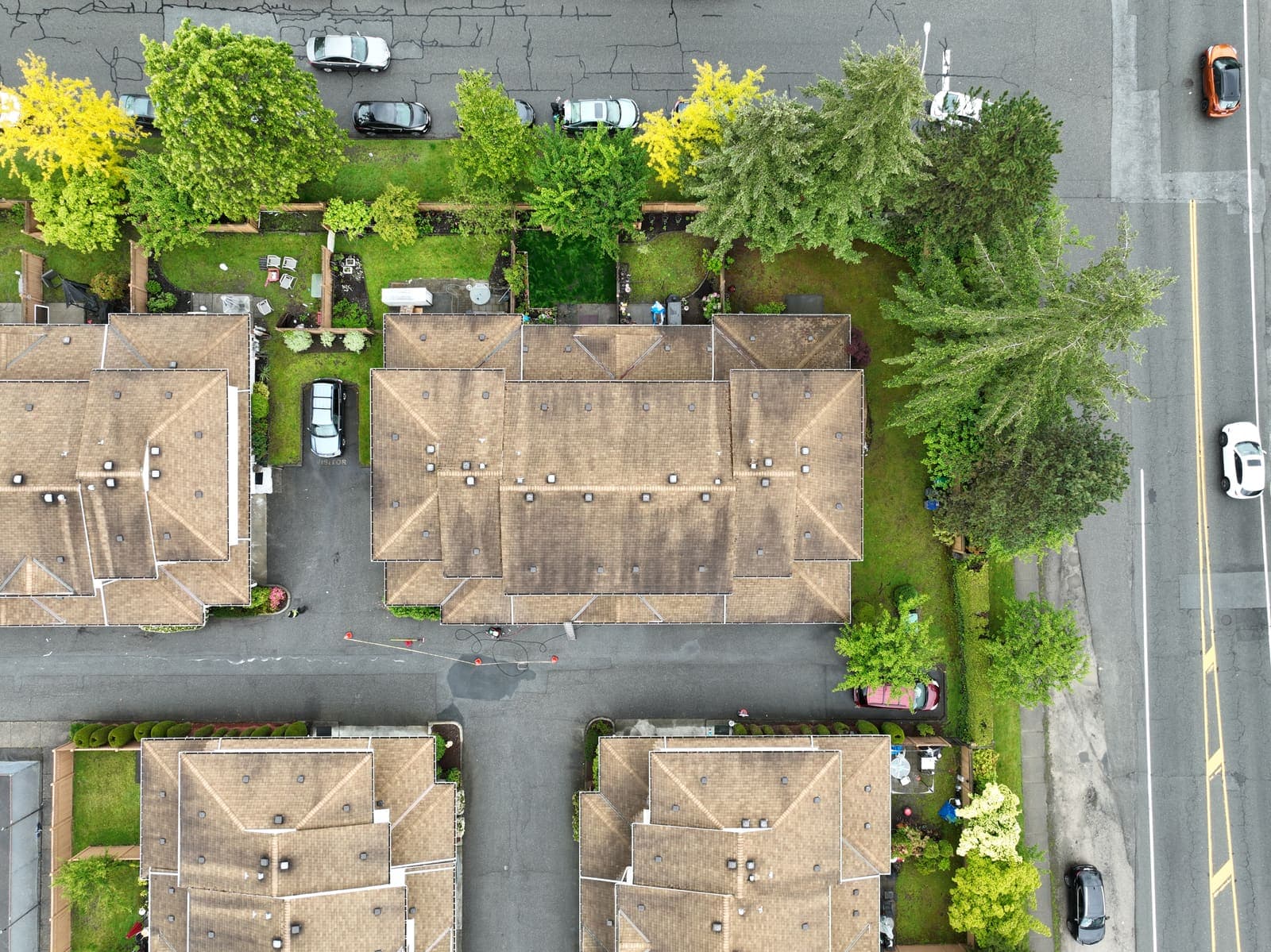
Why flat roofs need attention
The whole point of a pitched roof is that water and debris run off it. A flat or low-slope roof does not shed that way, so leaves, needles, grit and standing water sit on the surface, and moss and algae establish in the damp. Debris collects at drains and scuppers, which is where a flat roof most needs to stay clear so water can get away.
Left alone, a flat roof holds moisture against its membrane and lets debris block the drainage, which is exactly what a low-slope roof is least able to tolerate.
How they are cleaned
Flat and torch-on roofs are cleaned gently, with debris cleared by hand and blower and the surface soft washed to treat moss and algae, never with high pressure that could damage the membrane or its seams. Keeping the drains, scuppers and roof edges clear is a central part of the job, since that is what keeps water moving off the roof.
Access and safety still matter, and weight is managed carefully on the membrane. The goal is a clean, clear surface with the drainage working, not a blasted one.

Keeping a flat roof healthy
Because flat roofs hold debris rather than shedding it, they benefit from regular clearing, especially in fall when leaves and needles come down, and after storms. Keeping the drains clear is the single most important habit, since standing water is the enemy of a low-slope roof.
Overhanging trees make it worse, so trimming them back where possible reduces the debris load. A flat roof kept clear and treated for moss stays in far better shape than one left to collect debris and pond water.