
Why Is My Roof Covered in Black Streaks? (Gloeocapsa Algae, Explained for BC Homes)
If dark streaks are running down the north or shaded slopes of your roof, they are almost never dirt, soot or worn-out shingles. They are a living blue-green algae called Gloeocapsa magma, and coastal British Columbia gives it close to perfect conditions.
Understanding what the streaks actually are matters, because it decides how you get rid of them, and why the wrong method makes the problem worse and the bill bigger.
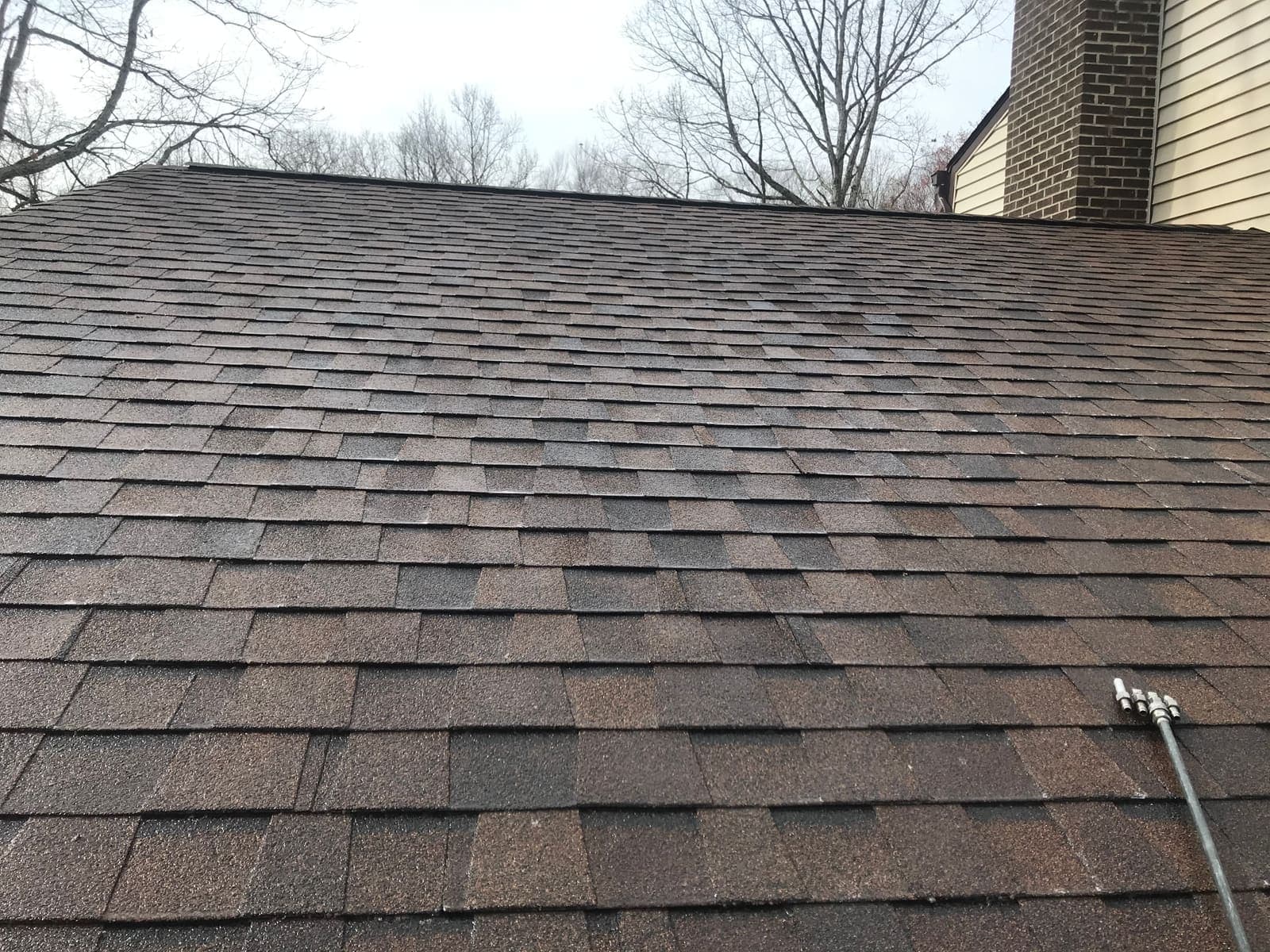
The streaks are alive
Gloeocapsa magma is an airborne algae that lands on your roof, feeds on the limestone filler in asphalt shingles, and holds moisture against the surface. It protects itself with a dark, UV-resistant sheath, that is the black you see. Spores drift from roof to roof, which is why one streaky house on a street is often followed by its neighbours.
Gravity does the rest. The algae washes down-slope with every rain, so the stains read as vertical streaks, heaviest on the shaded, slow-drying sides of the roof.
Why Lower Mainland roofs are prime territory
Our long, mild, wet season keeps roofs damp for weeks at a time, and heavy tree cover keeps north-facing slopes from ever fully drying. That combination, moisture plus shade plus airborne spores, is exactly what the algae needs. It is why homes here streak faster than in drier parts of Canada.
Left alone, the algae is usually followed by moss in the same shaded zones. Moss is the bigger structural threat: it lifts shingle edges, holds standing water, and works into the seams where leaks start.
Why you should not pressure wash it off
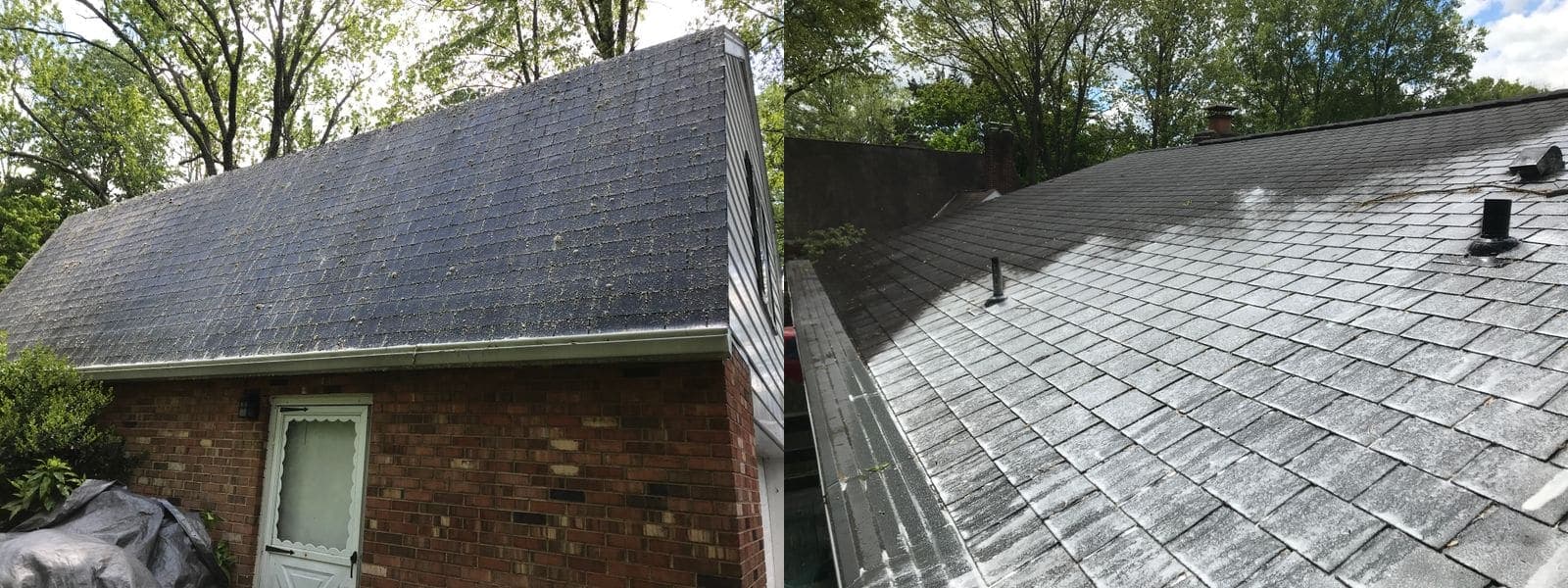
The instinct is to blast the streaks away, but high pressure strips the protective granules off asphalt shingles, shortens the roof's life, and voids most manufacturer warranties. It also only removes what is on the surface, leaving living spores behind to regrow within a season.
The correct method is soft washing: a biodegradable treatment is applied at low pressure, left to kill the algae and moss at the root, and gently rinsed. Because the organism is killed rather than merely knocked loose, the roof stays clean for years, and much of the dead residue keeps rinsing cleaner with subsequent rain.
Keeping the streaks from coming back
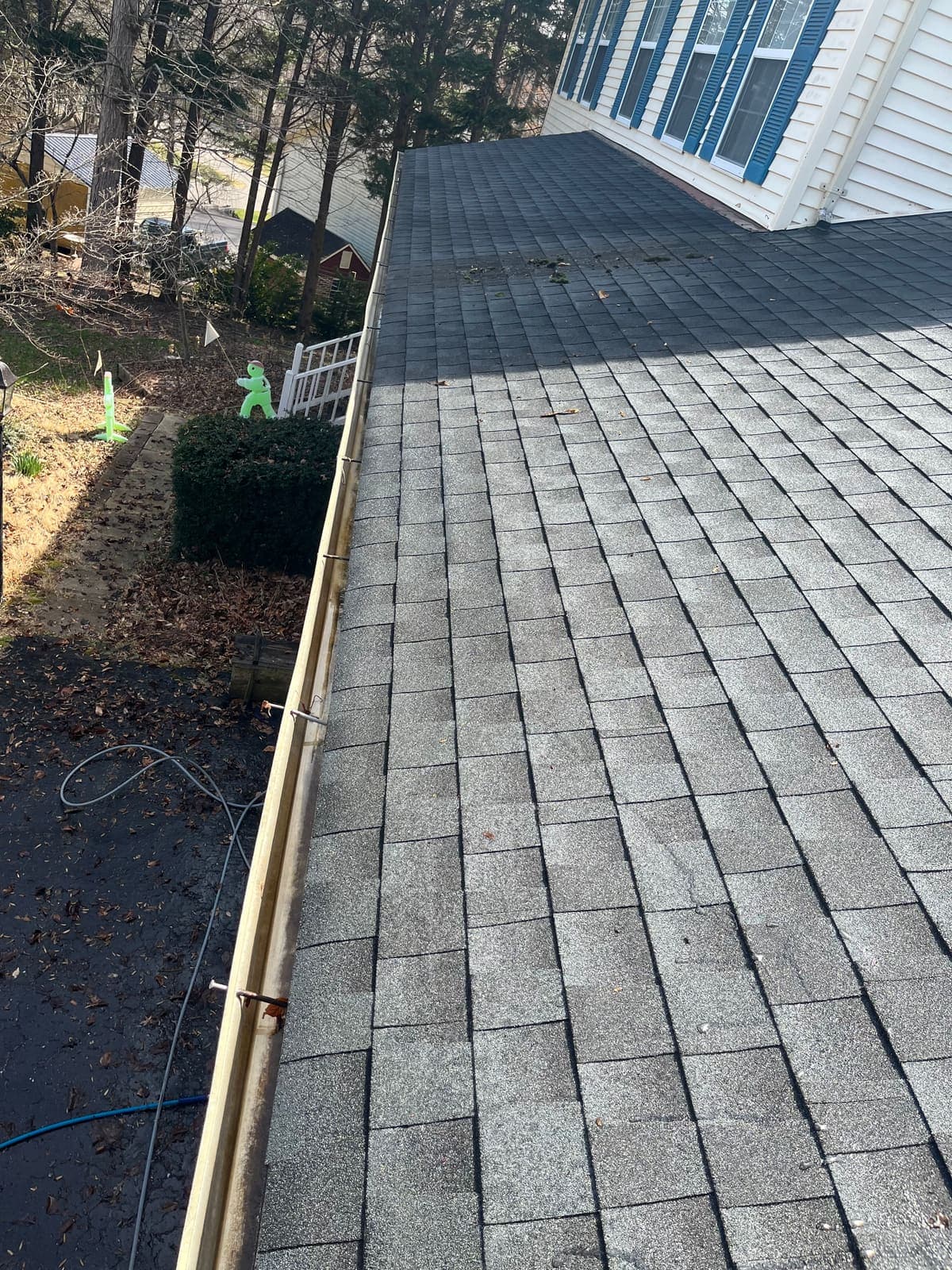
After a soft wash, a few habits slow the return: trim back branches that shade and drip onto the roof, keep gutters flowing so slopes drain properly, and consider zinc or copper strips near the ridge, whose runoff discourages regrowth. A light maintenance treatment every few seasons keeps shaded roofs ahead of it.
Costs vary with roof size, pitch and how much growth has taken hold, so the honest answer on price comes from a quick look at photos and your address. A free quote will tell you whether you are looking at a simple treatment or a heavier moss removal.