
How Often Should You Clean Your Roof in Coastal BC?
There is no single number that fits every roof, and any company that quotes you one without looking is guessing. In coastal BC, how often your roof needs cleaning comes down to how much shade and tree cover it gets, which way its slopes face, and what it is made of.
Here is how to read your own roof so you clean it often enough to protect it, without paying for cleans it does not need yet.
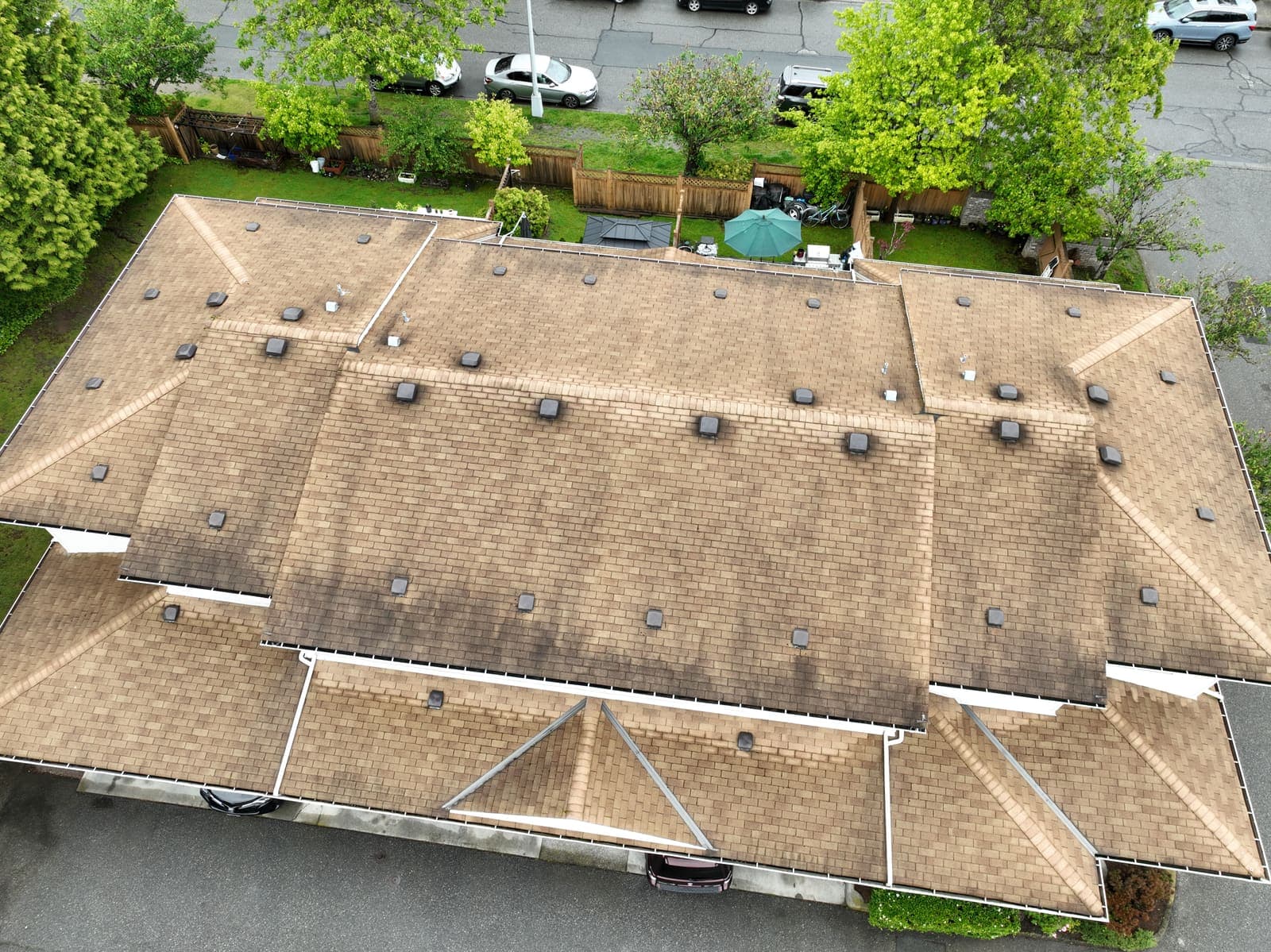
The factors that actually set the schedule
Two identical houses on the same street can be years apart on cleaning needs. A roof in full sun that faces south dries quickly and resists growth. A north-facing roof under a big cedar stays damp for weeks and greens up fast. Tree cover is the single biggest accelerator, shade plus constant organic debris is exactly what moss and algae want.
Roof material matters too. Asphalt shingle holds algae in its granular surface; concrete and clay tile are porous and grip moss even harder; metal sheds growth best. Your roof's own conditions, not a generic interval, decide the timing.
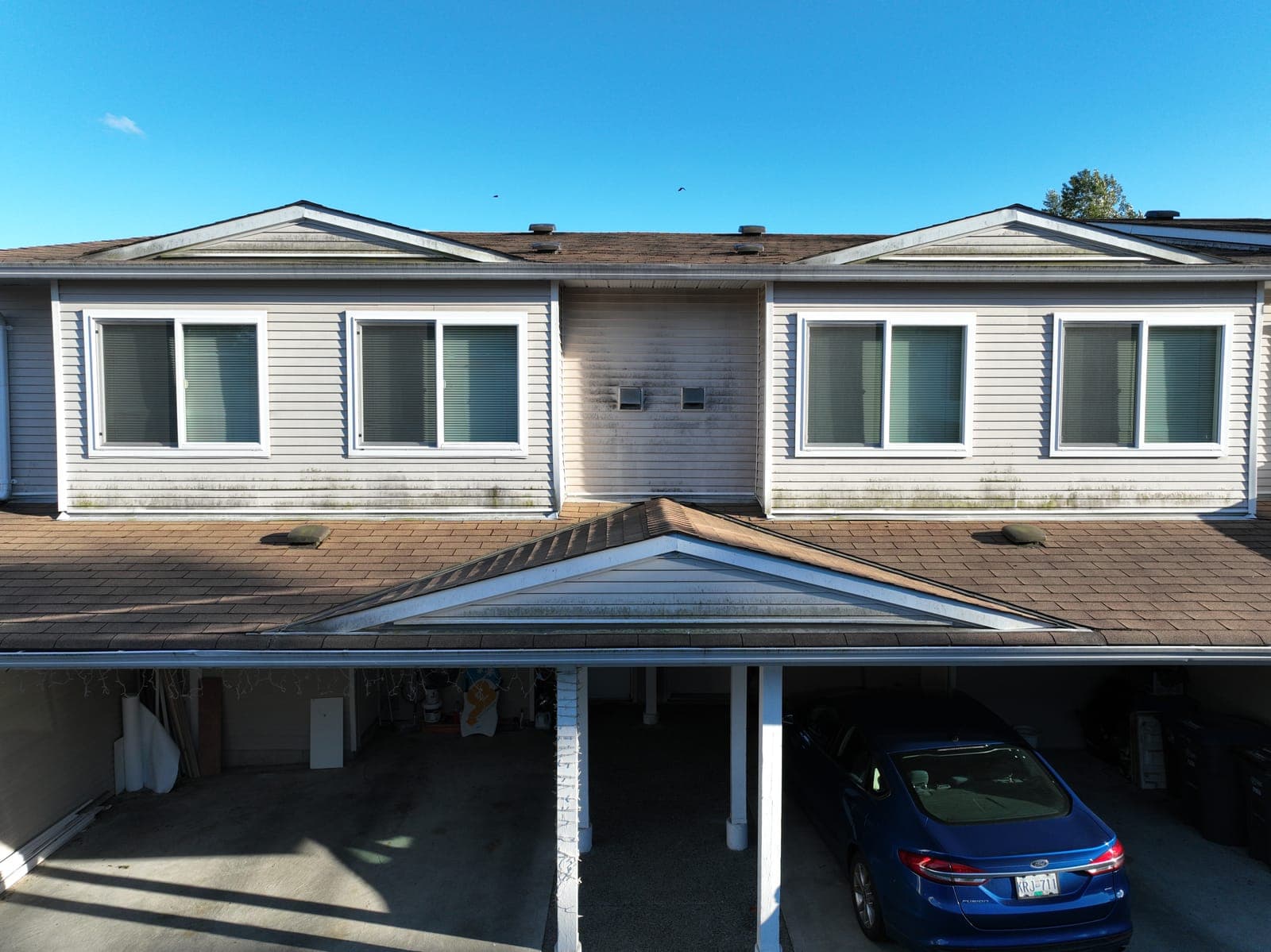
A realistic range for the Lower Mainland
As a rough guide, most homes here benefit from a soft-wash roof treatment every two to four years. Sunny, open roofs sit at the longer end; shaded, tree-covered and north-facing roofs need it closer to every couple of years, sometimes with a light maintenance treatment in between.
The goal is to treat the algae and early moss before it thickens into the mats that lift shingles and clog gutters. Cleaning on a sensible schedule is far cheaper than a heavy restoration clean, and much cheaper than the roof repairs that neglect eventually forces.
Signs it is time, regardless of the calendar
Rather than counting years, watch the roof. Book a clean when you see any of these, and do not wait for all of them.
- Dark streaks running down the shaded slopes
- Green or grey moss cushions forming along shingle edges and in valleys
- Moss or debris washing down into the gutters
- Lifting or curling shingle edges where moss has crept underneath
- A roof that looks noticeably darker than your neighbours' newer cleans