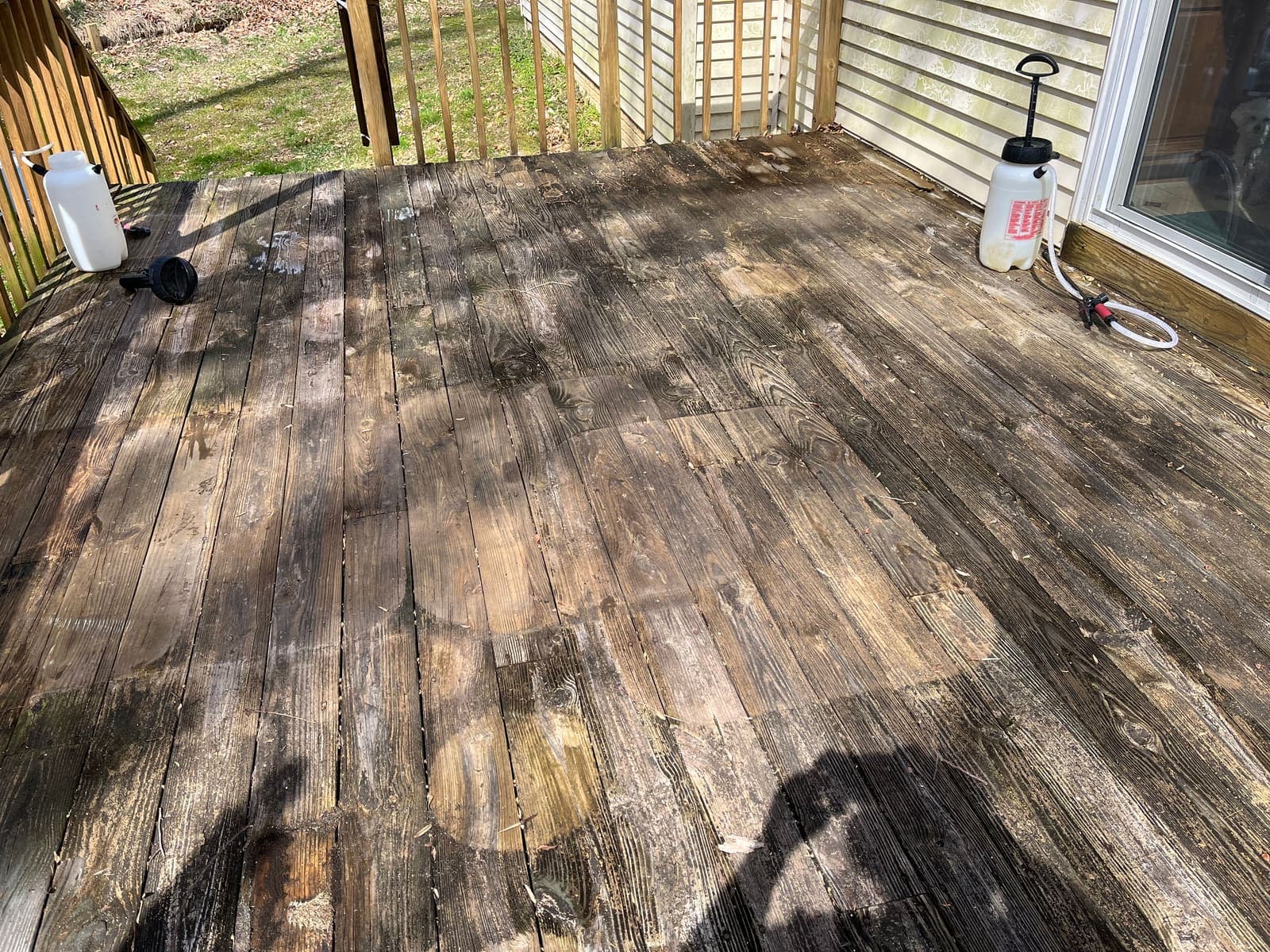
Cleaning Composite Decking (Trex, TimberTech) Without Voiding the Warranty
Composite decking was sold to a lot of us as maintenance-free, and it is close, it will not rot or need staining like wood. But maintenance-free does not mean clean-free. In the shade and damp of the Lower Mainland, composite boards still grow a slick film of mould and algae, especially on north-facing and tree-covered decks.
The catch is that the wrong cleaning method can permanently mar composite and void the manufacturer's warranty. Here is how to clean it properly.
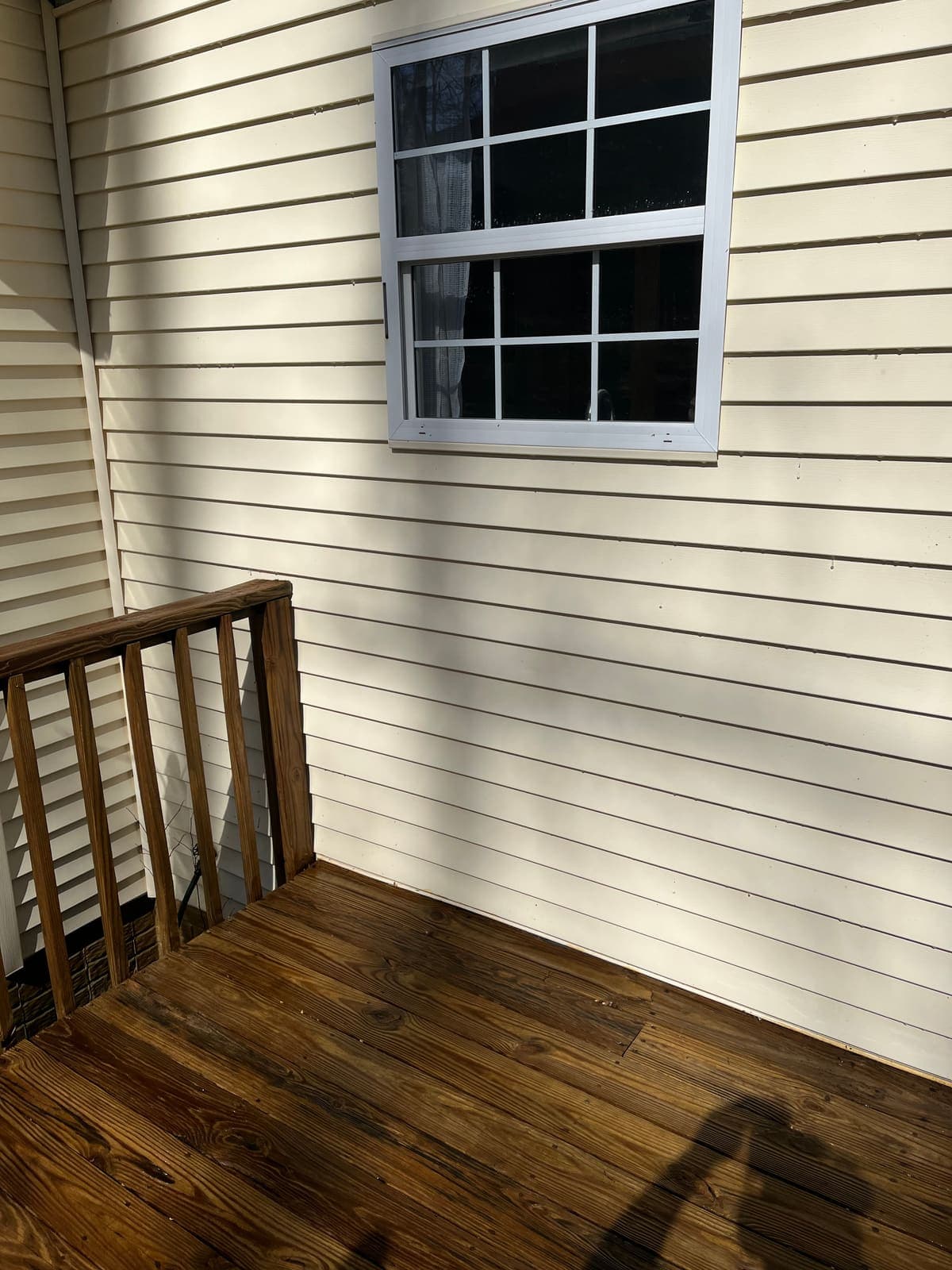
Why composite still gets dirty here
Composite boards are wood fibres bound in plastic. The plastic resists water, but organic debris, pollen, leaf tannins, tree drip, settles into the grain texture and the shaded gaps between boards, and that film feeds mould and algae in our wet season. It is the surface that is dirty, not the board failing.
The result is the same greasy green slickness you get on any shaded deck, which is a genuine slip hazard on stairs and landings through the rainy months.
The pressure setting that voids the warranty
This is the part that catches people. Most composite manufacturers, Trex and TimberTech included, publish maximum pressure limits for cleaning and warn that exceeding them, or using a narrow, close nozzle, can damage the cap layer and void the warranty. A rented pressure washer on full blast will erode the surface, leave permanent marks, and expose the fibres underneath.
The safe approach is closer to soft washing: a deck-appropriate cleaner is applied and given time to break down the mould and algae, worked gently with a soft brush if needed, and rinsed at low pressure with a wide fan tip held well back. The chemistry lifts the growth so force does not have to.
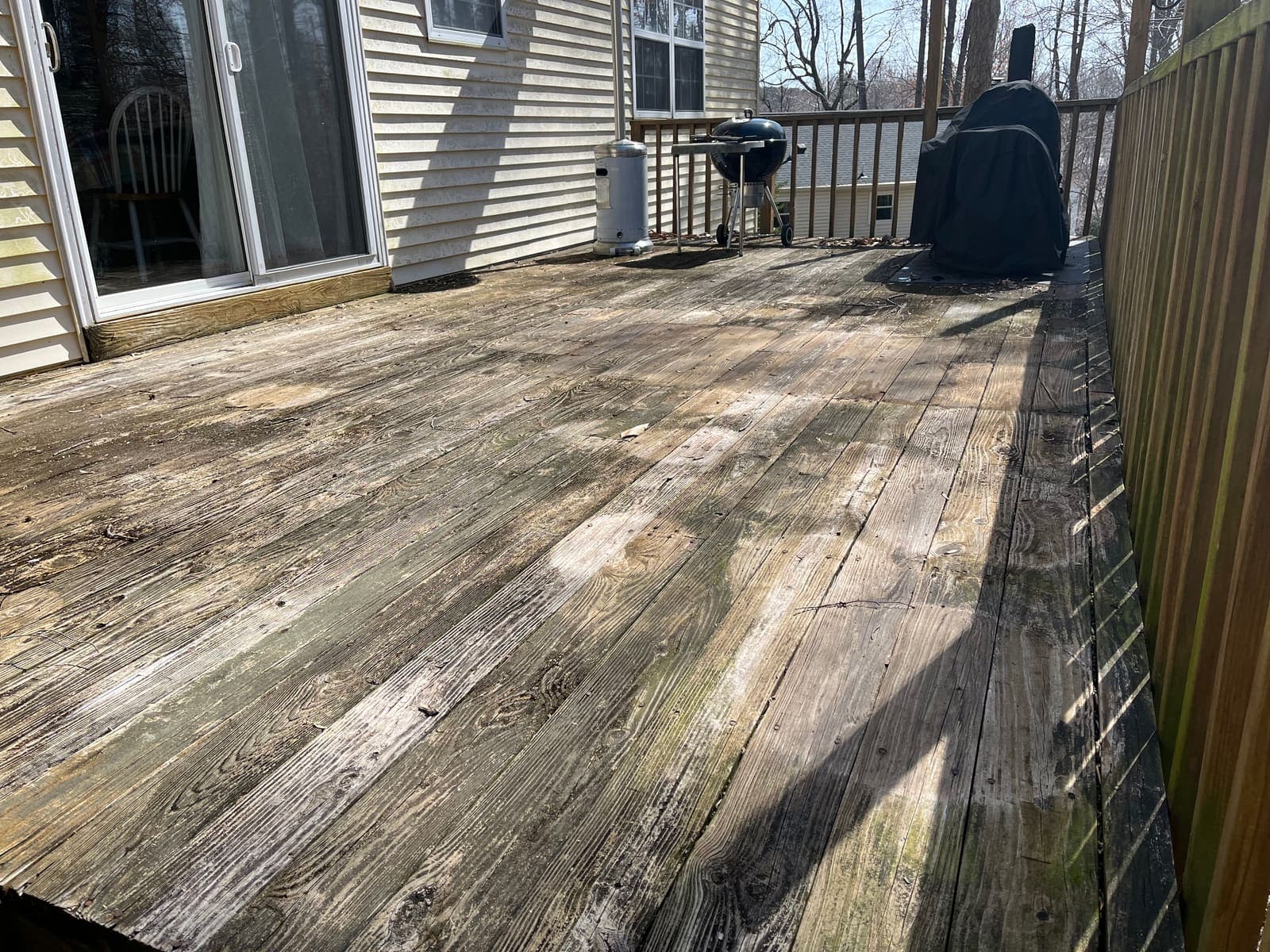
Cleaner first, gentle rinse second
Working with the boards, not against them, is the whole method: apply the cleaner, let it dwell, agitate mould spots with a soft brush, then rinse. Cleaning between the boards and around railings matters too, since that is where growth hides and re-establishes. Done this way, composite comes back to an even, clean colour with no risk to the cap.
Check your specific manufacturer's care guide before anyone cleans your deck, and make sure whoever you hire knows those limits. It is a quick question that protects a warranty worth far more than the cost of the clean.